
Categories
California Real Estate, Energy Efficiency, Homeownership, Real Estate Tips, Solar & Green HomesPublished June 27, 2026
Solar Panels and Homeownership: What Every California Homeowner Needs to Know Before You Buy or Sell

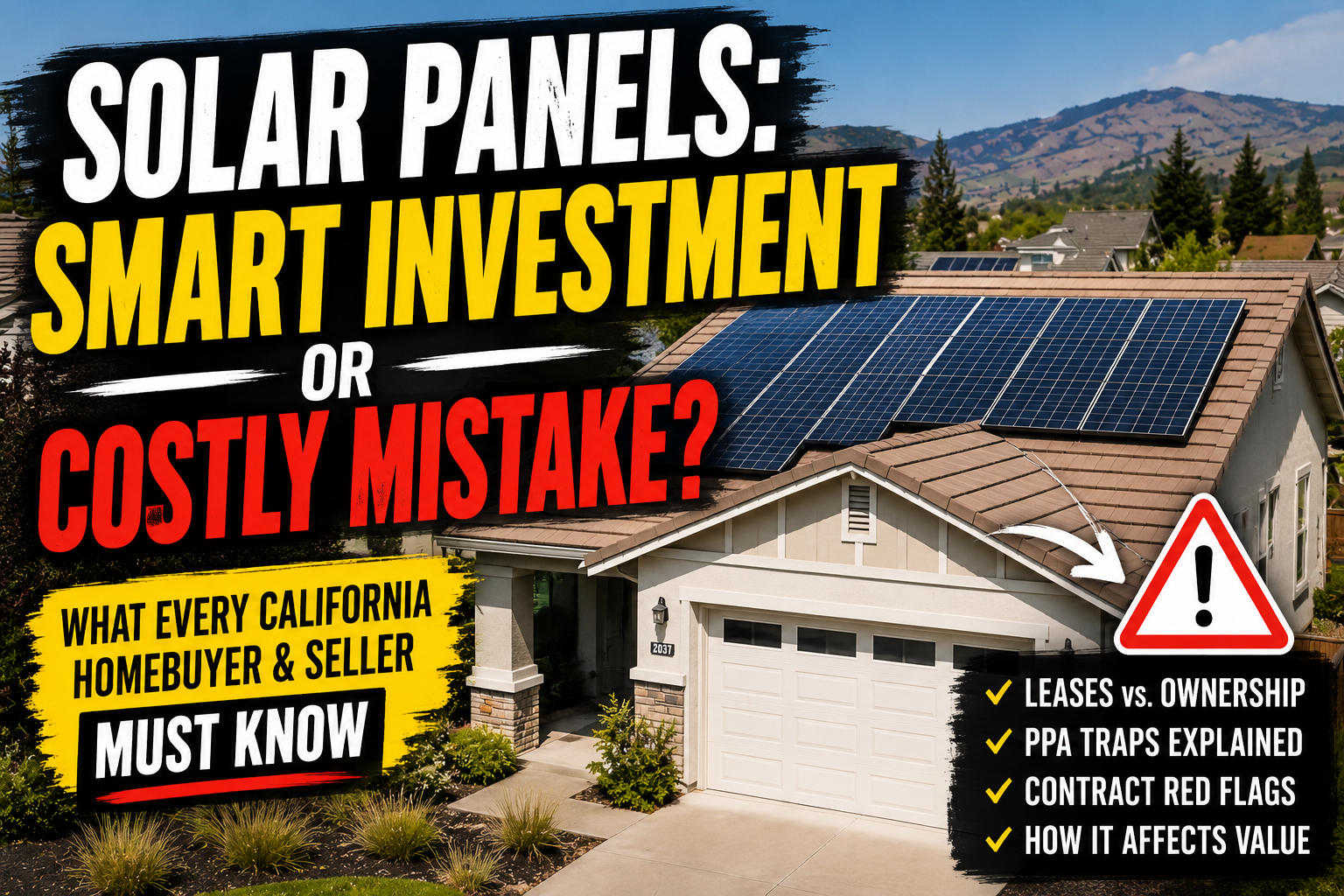
As energy costs continue to rise across California, more homeowners are turning to solar power to reduce utility bills and increase energy efficiency. Throughout communities like El Dorado Hills, Folsom, Cameron Park, Roseville, Rocklin, and the Greater Sacramento region, solar panels have become a common feature on both existing and newly constructed homes.
While solar can provide significant benefits, not all solar systems are created equal. Whether you're considering installing solar, purchasing a home with solar already in place, or preparing to sell a solar-equipped property, understanding the details of your solar agreement can save you thousands of dollars and prevent unexpected complications.
At Team Ostrode Properties, we regularly help buyers and sellers navigate solar-related questions during real estate transactions. Understanding how solar impacts property value, financing, disclosures, and resale potential is an important part of making informed real estate decisions.
Why Solar Matters More Than Ever in California
Solar is no longer simply an optional upgrade for many California homeowners.
Under the California Energy Commission's Building Energy Efficiency Standards (Title 24), nearly all newly constructed single-family homes and multifamily buildings up to three stories are required to include an on-site solar photovoltaic (PV) system.
The goal is to reduce energy consumption, lower utility costs, and support California's long-term sustainability initiatives. As a result, buyers shopping for newer homes throughout the Sacramento region will likely encounter properties equipped with solar panels.
However, while solar may be required on many newly built homes, the type of solar agreement attached to the property can vary significantly. Some builders include owned systems, while others utilize solar loans, solar leases, or Power Purchase Agreements (PPAs).
Understanding the type of agreement attached to a home is critical because it can affect monthly expenses, financing approval, resale value, and even how easily the property can be sold in the future.
This is one reason why working with an experienced real estate professional matters. At Team Ostrode Properties, we help buyers and sellers understand exactly what type of solar agreement is attached to a property and how it may impact their goals both today and years down the road.
Why Solar Matters in Today's Housing Market
Many buyers actively search for homes with lower utility costs and energy-efficient features. A properly structured solar system can be an attractive selling point and may increase buyer interest.
However, solar can also create challenges when contracts are misunderstood, transfer requirements are overlooked, or buyers are surprised by ongoing obligations.
The key is understanding exactly what type of solar agreement is attached to the property before entering into a purchase or sale.
The Four Most Common Types of Solar Agreements
1. Owned Solar Systems
An owned solar system means the homeowner purchased the panels outright, either with cash or through a loan that has already been paid off.
Benefits
- No monthly solar payments
- Homeowner receives all energy savings
- Often viewed most favorably by buyers
- May increase marketability
- Simplest transfer during a sale
What to Verify
- Warranty documentation
- System age
- Maintenance records
- Production history
Owned solar systems are generally considered the most desirable option during a real estate transaction because there are typically no third-party approvals or transfer requirements.
2. Solar Loan
Many homeowners finance solar through a loan rather than paying cash upfront.
Benefits
- Lower initial investment
- Homeowner receives energy savings
- Potential tax incentives
- Opportunity to own the system over time
What to Watch For
- Remaining loan balance
- Interest rate
- Monthly payment amount
- Whether the loan can be assumed by a buyer
- Whether the loan must be paid off at closing
A solar loan can impact negotiations and financing, making it important to review the terms early in the transaction process.
3. Solar Lease
With a solar lease, the homeowner pays a monthly fee to use the solar equipment but does not own the system.
Benefits
- Little or no upfront installation cost
- Predictable monthly payments
- Reduced maintenance concerns
Potential Challenges
- Buyer must often qualify to assume the lease
- Transfer approval may be required
- Lease payments may increase over time
- Buyout costs can be substantial
- Additional paperwork can delay closing
Solar leases are one of the most common solar-related issues encountered during real estate transactions. Understanding the transfer process before listing your home can help avoid delays later.
4. Power Purchase Agreement (PPA)
A Power Purchase Agreement allows homeowners to purchase the electricity generated by the solar system rather than leasing the equipment itself.
Instead of paying for the panels, the homeowner pays for the power produced.
Benefits
- Minimal upfront investment
- Potential savings compared to utility rates
- Maintenance often covered by the provider
Potential Challenges
- Long contract terms
- Escalation clauses that increase costs over time
- Transfer requirements during resale
- Buyer qualification requirements
- Potential complications during financing
While PPAs can offer immediate savings, homeowners should carefully evaluate the long-term obligations outlined in the contract.
Why Reading the Solar Contract Is So Important
One of the biggest mistakes homeowners make is signing a solar agreement without fully understanding the details.
Many solar contracts extend 20 to 25 years and may contain provisions that significantly impact future costs or resale opportunities.
Before signing any solar agreement, carefully review:
- Contract length
- Monthly payment obligations
- Escalation clauses
- Buyout provisions
- Maintenance responsibilities
- Warranty coverage
- Transfer requirements
- Early termination penalties
- Ownership rights
What appears affordable today could become far more expensive over time if annual increases are built into the agreement.
If you're unsure what you're signing, consult with both the solar provider and a trusted real estate professional who understands how solar agreements affect homeownership and resale.
Does Solar Increase Home Value?
One of the most common questions homeowners ask is whether solar panels increase property value.
The answer depends largely on the type of solar agreement.
Owned Solar
Owned systems are generally viewed most favorably because buyers receive the benefit of lower utility costs without assuming additional obligations.
Solar Loans
Loan-financed systems can still be attractive, particularly when the remaining balance is manageable and the terms are favorable.
Solar Leases and PPAs
While these arrangements may provide energy savings, they can sometimes reduce the buyer pool if prospective purchasers are unwilling or unable to assume the agreement.
Every situation is unique, which is why proper evaluation is important when pricing and marketing a home.
What Buyers Should Ask Before Purchasing a Home With Solar
Before purchasing a solar-equipped home, buyers should ask:
- Is the system owned, financed, leased, or under a PPA?
- What are the current monthly payments?
- Are there annual payment increases?
- How old is the system?
- What warranties remain?
- What is the average monthly electric bill?
- Has the system required repairs?
- What transfer requirements exist?
- What happens if the home is sold again in the future?
Understanding these details upfront can help buyers avoid surprises after closing.
What Sellers Should Gather Before Listing a Solar Home
If you're planning to sell a home with solar panels, having the proper documentation ready can make the transaction smoother.
Gather:
- Solar contract
- Loan payoff information
- Utility bills
- Warranty documents
- Production reports
- Transfer instructions from the solar provider
- Maintenance records
Providing this information early helps buyers make informed decisions and can reduce delays during escrow.
Why Working With a Real Estate Agent Matters
Solar agreements can impact financing approval, disclosures, negotiations, property value, and closing timelines.
At Team Ostrode Properties, we help buyers and sellers navigate:
- Solar ownership structures
- Lease transfer requirements
- Loan payoff options
- Disclosure obligations
- Property valuation considerations
- Marketing strategies for solar-equipped homes
Our goal is to identify potential issues early, provide clear guidance, and help create a smoother transaction from contract to closing.
Whether you're purchasing a home with solar, selling a solar-equipped property, or considering a new installation, having an experienced real estate professional on your side can make all the difference.
Frequently Asked Questions
Is solar required on new homes in California?
Yes. Under California's Title 24 Building Energy Efficiency Standards, nearly all newly constructed single-family homes and multifamily buildings up to three stories are required to include an on-site solar photovoltaic (PV) system. Buyers should still verify whether the system is owned, financed, leased, or subject to a Power Purchase Agreement (PPA), as the ownership structure can significantly impact future costs and obligations.
Does solar increase home value?
Owned solar systems often make a property more attractive to buyers and may contribute positively to market value. The impact depends on the system's age, condition, production capacity, and ownership structure.
Is a solar lease bad when selling a home?
Not necessarily. However, leases can create additional steps because buyers often must qualify to assume the lease and the solar company may need to approve the transfer.
What is the difference between a solar lease and a PPA?
A solar lease charges a fixed monthly payment for the equipment. A Power Purchase Agreement charges for the electricity produced by the system.
Should I pay off my solar loan before selling?
It depends on the remaining balance, market conditions, and buyer preferences. Consulting with a real estate professional can help determine the best strategy.
Can a buyer refuse to assume a solar lease?
Yes. Some buyers may not wish to assume lease obligations, which can affect negotiations and financing.
How long are solar contracts?
Most solar leases and PPAs range from 20 to 25 years, although terms vary by provider.
What documents should I request when buying a home with solar?
Request the solar agreement, warranty information, utility bills, production reports, maintenance records, and any transfer documentation required by the solar provider.
Thinking About Buying or Selling a Home With Solar?
If you're considering purchasing a home with solar panels or preparing to sell a solar-equipped property, Team Ostrode Properties can help you understand the details and avoid costly surprises.
Our team has experience helping buyers and sellers navigate solar leases, PPAs, solar loans, and owned systems throughout El Dorado Hills, Folsom, Cameron Park, Roseville, Rocklin, and the Greater Sacramento region.
If you have questions about how solar may impact your home's value or your next move, contact Team Ostrode Properties today. We're here to help you make informed decisions and move forward with confidence.
Team Ostrode Properties
Scott Ostrode, REALTOR®
916-799-1662
DRE 01241383
Serving El Dorado Hills, Folsom, Cameron Park, Roseville, Rocklin, Sacramento, and surrounding communities.
Ready to buy or sell? Contact Team Ostrode Properties today and let our experience guide your next move.

Scott Ostrode
Team Lead & Realtor | Team Ostrode Properties | Keller Williams | PLACE
or another way